Table Of Content

This death comes as a major twist; throughout the conversation between Roderick and Dupin, he notes that he's not answering texts he's receiving from his granddaughter. As you may remember, Madeline's plan was to turn Fortunato into a tech company, and one of her major projects was A.I. Consciousness, created from scanning people's social media posts and more. In a direct reference to Poe's most famous work (and how did we not see this coming with the name "LENORE"?!), A.I. Lenore only kept texting Roderick variations of, you guessed it, "Nevermore."
The Masque of the Red Death
The tale highlights the Gothic feature of the doppelganger, or character double, and portrays doubling in inanimate structures and literary forms. The narrator, for example, first witnesses the mansion as a reflection in the tarn, or shallow pool, that abuts the front of the house. The mirror image in the tarn doubles the house, but upside down—an inversely symmetrical relationship that also characterizes the relationship between Roderick and Madeline. An unnamed narrator approaches the house of Usher on a “dull, dark, and soundless day.” This house—the estate of his boyhood friend, Roderick Usher—is gloomy and mysterious. The narrator observes that the house seems to have absorbed an evil and diseased atmosphere from the decaying trees and murky ponds around it. He notes that although the house is decaying in places—individual stones are disintegrating, for example—the structure itself is fairly solid.
Cast and characters
She promises that they’ll never be convicted for their crime — as long as they accept a deal. The Ushers will achieve massive success, but their bloodline will die just before Madeline and Roderick’s own deaths. As each of the Usher children grow up enjoying their lavish lifestyles, they’re unaware their fates are already sealed. The story explicitly ties the physical House of Usher to the Usher lineage, stating that the peasants in that domain use the phrase “House of Usher” for both. However, the connection between the house and the family runs deeper than linguistic shorthand. The narrator observes the house as having an almost human-like quality, describing its windows as “eye-like.” Just as Roderick appears to radiate his own melancholy, so too does the house have a depressing air.
‘Good Times’ Boss Defends Animated Reboot, Telling Viewers: “I Understand If This Is Jolting”
He witnesses Madeline's reemergence and the subsequent, simultaneous death of the twins. The narrator is the only character to escape the House of Usher, which he views as it cracks and sinks into the mountain lake. Fearing that her body will be exhumed for medical study, Roderick insists that she be entombed for two weeks in the family tomb located in the house before being permanently buried. The narrator helps Roderick put Madeline's body in the tomb, whereupon the narrator realizes that Madeline and Roderick are twins. The narrator also notes that Madeline's body has rosy cheeks, which sometimes happens after death.
A Midnight Dreary
In a final fit of rage, she attacks her brother, scaring him to death as she herself expires. The narrator then runs from the house, and, as he does, he notices a flash of moonlight behind him. He turns back in time to see the Moon shining through the suddenly widened crack in the house. As he watches, the House of Usher splits in two and the fragments sink away into the lake.
A Summary and Analysis of Edgar Allan Poe’s ‘The Fall of the House of Usher’
The Fall of the House of Usher Family Tree - Usher Siblings Explained - Men's Health
The Fall of the House of Usher Family Tree - Usher Siblings Explained.
Posted: Fri, 13 Oct 2023 07:00:00 GMT [source]
On a stormy autumn (with an implied pun on the word fall?) evening, a traveler—an outsider, like the reader—rides up to the Usher mansion. This traveler, also the first-person narrator and boyhood friend of Roderick Usher, the owner of the house, has arrived in response to a summons from Usher. Very soon we understand that, whatever else it may mean, the house is a metaphor for the Usher family itself and that if the house is seriously flawed, so are its occupants.

Poe's Short Stories (SparkNotes Literature Guide)
The Fall of the House of Usher review: Mike Flanagan’s Poe Cinematic Universe - Vox.com
The Fall of the House of Usher review: Mike Flanagan’s Poe Cinematic Universe.
Posted: Fri, 13 Oct 2023 07:00:00 GMT [source]
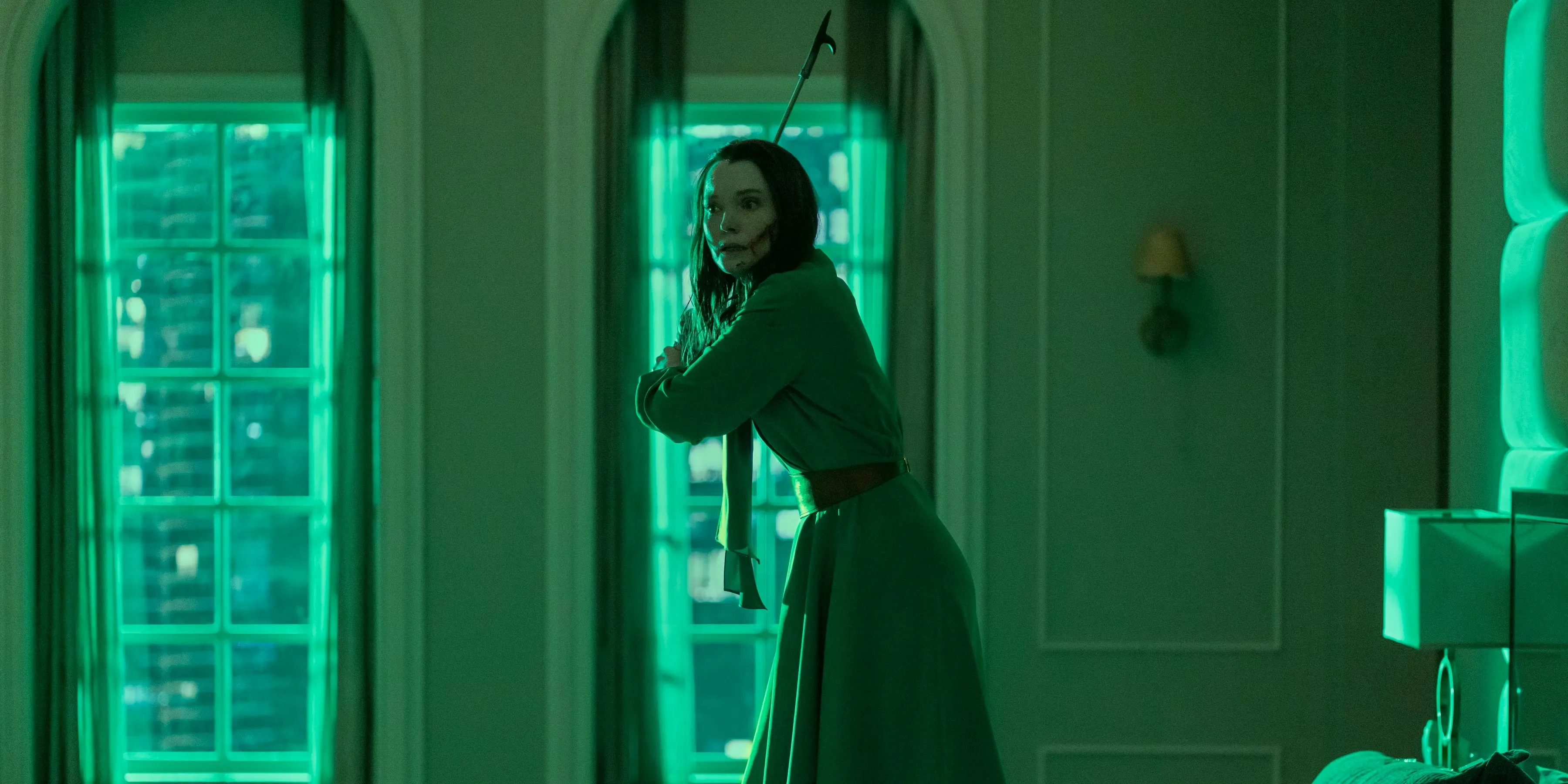
Usher has been reimagined as the head of a massive pharmaceutical company he runs with his twin sister, Madeline (Mary McDonnell). Every episode includes flashbacks to a young Roderick (Zach Gilford), Madeline (Willa Fitzgerald), and Annabel Lee (Katie Parker), Roderick’s first wife. These fill in how the Ushers made their fortune, but they’re kind of a narrative drag. It’s important that Roderick and Madeline are cruel, selfish creatures—less so how they got that way. What’s more interesting is to watch how the fallout of their decisions fell on Roderick’s many children, all torn apart by some of Poe’s most memorable creations. Might we then interpret Roderick as a symbol of the conscious mind – struggling to conceal some dark ‘secret’ and make himself presentable to his friend, the narrator – and Madeline as a symbol of the unconscious?
Carla Gugino
Ateach critical moment in the story, the narrator hears noises coming fromoutside the room. Just as the hero kills the dragon, the sound of a shieldfalling—a sound which occurs in the story—disturbs both the narrator andRoderick. Roderick’sfollowing ravings reveal that he fears that he buried Madeline alive.
Roderick tells the narrator that he suffers from nerves and fear and that his senses are heightened. Roderick’s sister, Madeline, has taken ill with a mysterious sickness—perhaps catalepsy, the loss of control of one’s limbs—that the doctors cannot reverse. He listens to Roderick play the guitar and make up words for his songs, and he reads him stories, but he cannot lift Roderick’s spirit. Soon, Roderick posits his theory that the house itself is unhealthy, just as the narrator supposes at the beginning of the story.
While his neuroses make him an easy target for his siblings, Freddie’s fiery jealousy and compounding insecurity force him down a path that even those closest to Freddie are shocked to see. This time, Flanagan’s ghoulish crew is entering familial territory, as ruthless siblings Roderick and Madeline Usher have built Fortunato Pharmaceuticals into an empire of wealth, privilege, and power. But past secrets come to light when the heirs to the Usher dynasty start dying at the hands of a mysterious woman from their youth.
Poe employs the word “house” metaphorically, but he also describes a real house. Not only does the narrator get trapped inside the mansion, but we learn also that this confinement describes the biological fate of the Usher family. The family has no enduring branches, so all genetic transmission has occurred incestuously within the domain of the house.
And as Roderick Usher got sicker and sicker in real life—his rare form of vascular dementia gave him horrific hallucinations, including Griswold's Jester costume and his various children's dead bodies—his bill came due, and all of his children died in front of him. It's through this framework—Roderick telling stories to Dupin—that we learn just about everything that has happened to the present point. We learn about the violent and untimely deaths of each of Roderick's children—whether from Annabel Lee (Katie Parker) or "bastards"—and how in every case, it was their own failings that led to their demise. We also learn, through a series of flashbacks, about how Roderick (played in younger form by Zach Gilford) rose to power within Fortunato, egged on by his duplicitous and cold sister, Madeline (played by Mary McDonnell in the present and Willa Fitzgerald in flashbacks).
Problematically, Flanagan tends to conflate queerness with depravity and sexual fluidity is punished here with an unnerving flourish. But the show remembers to be actually scary, with truly inspired uses of chimps, mirrors and sprinkler systems. There’s no question that The Fall of the House of Usher ranks among Flanagan’s finest works. Roderick Usher (Bruce Greenwood) attends a joint funeral for a number of his adult children, and in a montage of press coverage, we see how a series of “freak accidents” has wiped out his entire bloodline. The Usher patriarch then sits in a dilapidated mansion with Carl Lumbly’s Auguste Dupin (based on Poe’s famous recurring character who is considered the first detective in fiction) and offers him a confession. We then flash back a few weeks to when the Usher clan were on top of the world, having become Sackler-esque billionaires peddling opiates that have inflicted untold misery on the American public, and begin to watch their painful demise.
Not when he drugged Madeline's drink, just as she drugged Griswold's all those years earlier, and not when he cut her eyes out, mummifying her with the sapphires she so valued in her time on this earth. That left only two Ushers—the ones who entered the world together, and had to go out as well. While Madeline tried to skirt the system by having Roderick overdose on his own Fortunato meds, Verna wasn't letting that happen.
Roderick eventually declares that he has been hearing these sounds for days, and that they are being made by his sister, who was in fact alive when she was entombed. The chef’s kitchen area landscape is laden with a white marble backsplash, a couple of Viking utilities, a built-in banquet and gray cabinets to boot. The living room has dark wood floors, a tiled fireside and stenciled wooden beams.


No comments:
Post a Comment